
In November 1844, Queen Victoria and Prince Albert were invited to Burghley House for the Christening of the Marquess and Marchioness of Exeter’s daughter, named Victoria.
As there were limited train lines at that point, the closest they could arrive by rail was Weedon, Northamptonshire.
Having departed from Euston Station and stopping at Tring to top up the engine’s water, the train arrived at Weedon Station shortly before noon.
And that’s when Queen Victoria set foot in our county.
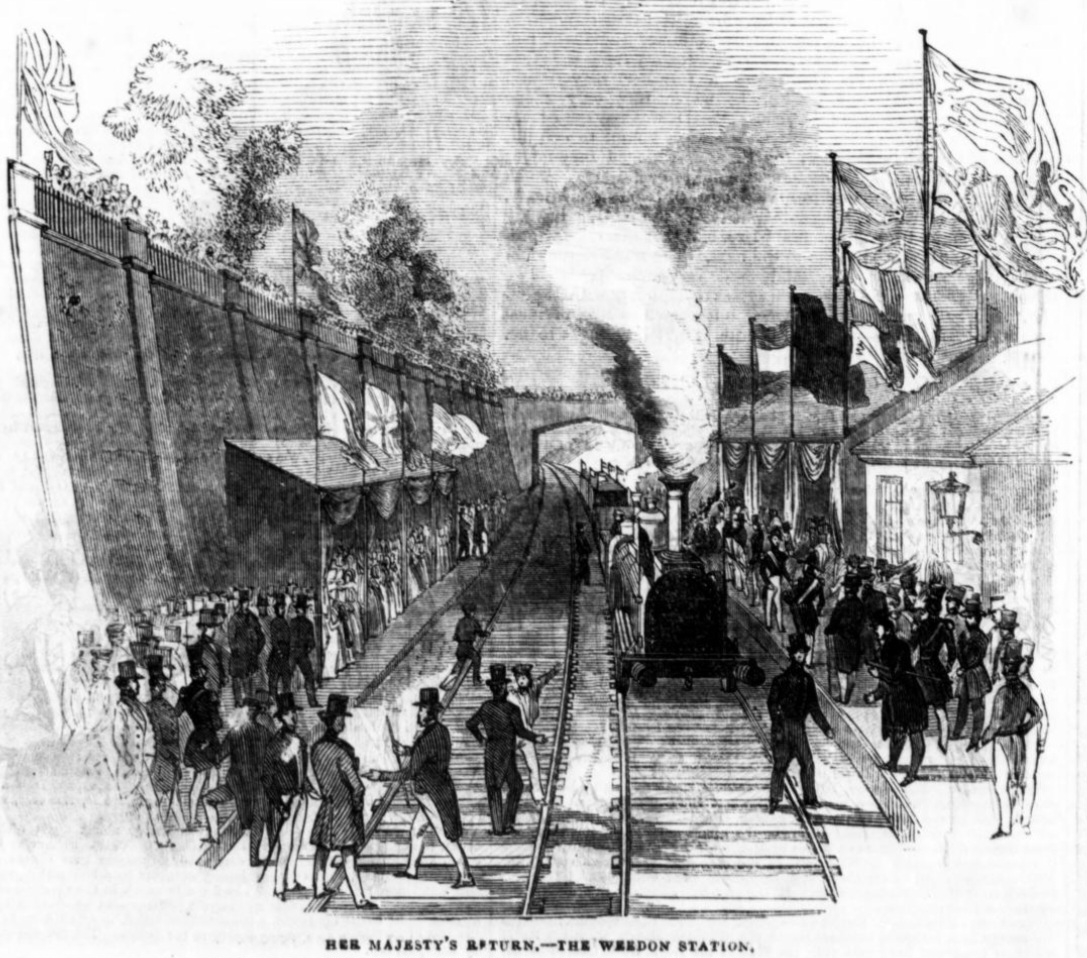
She was welcomed by the Marquess of Exeter, who had ridden over from Burghley House to meet her.
After a small reception with some local notables, the Royal Couple climbed into the Royal Carriage which carried them to Northampton.
The town had gone all out for their arrival. Every house on the Royal Carriage’s route was decorated with flags and bunting.
There were also lots of evergreens – possibly a reference to Prince Albert popularising the Christmas Tree?
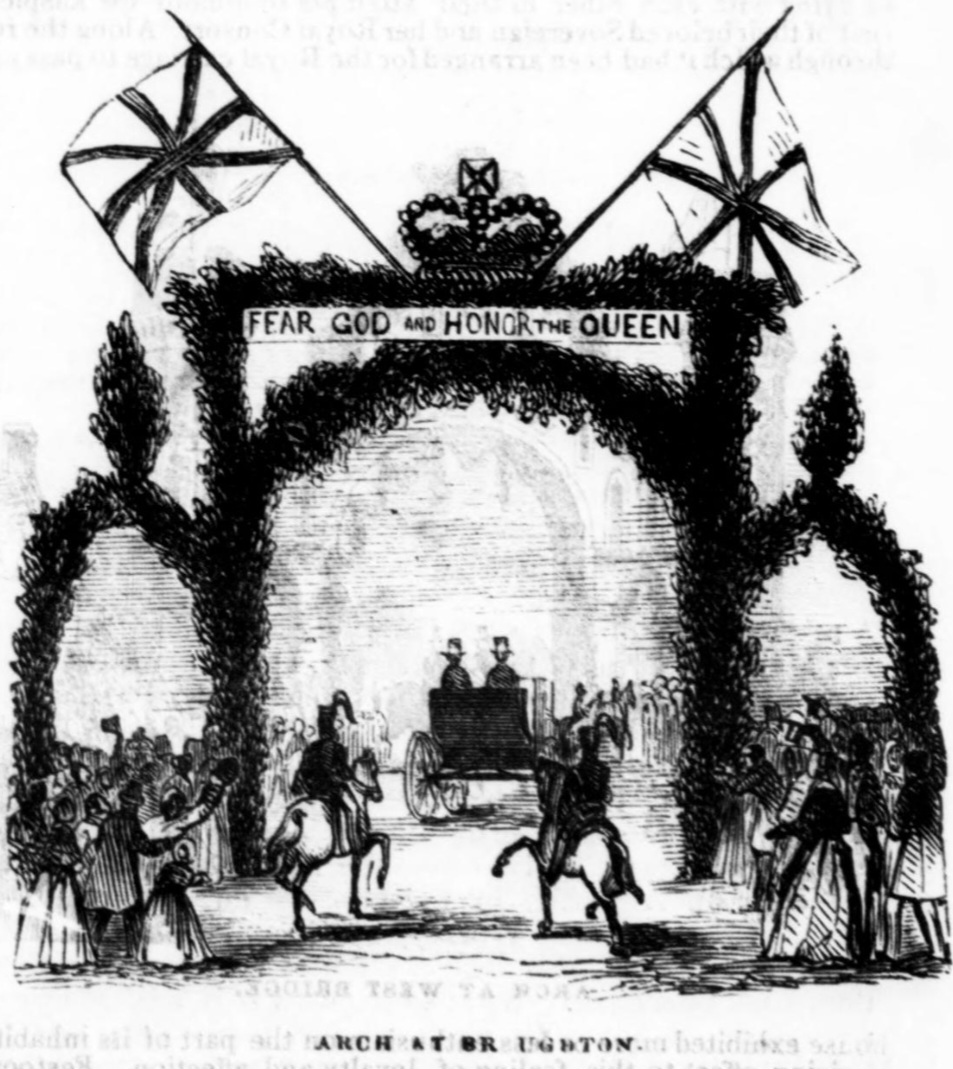
A number of festal arches had been built throughout the town. These are temporary decorative arches, usually erected to celebrate special occasions such as a Royal visit.
There were festal arches on almost every part of their journey.

The town had also built a wooden replica of the long-demolished Northampton Castle.
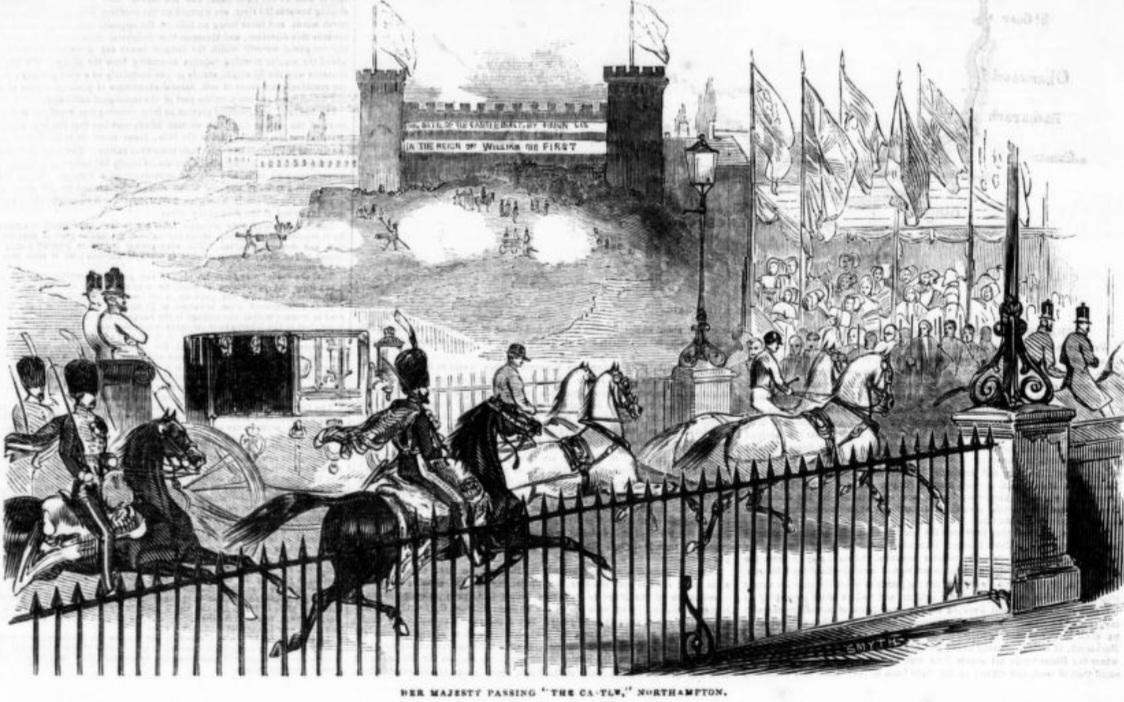
The Royal Carriage stopped at the Market Place. Queen Victoria acknowledged the adoring crowds, before meeting with the town’s Mayor.
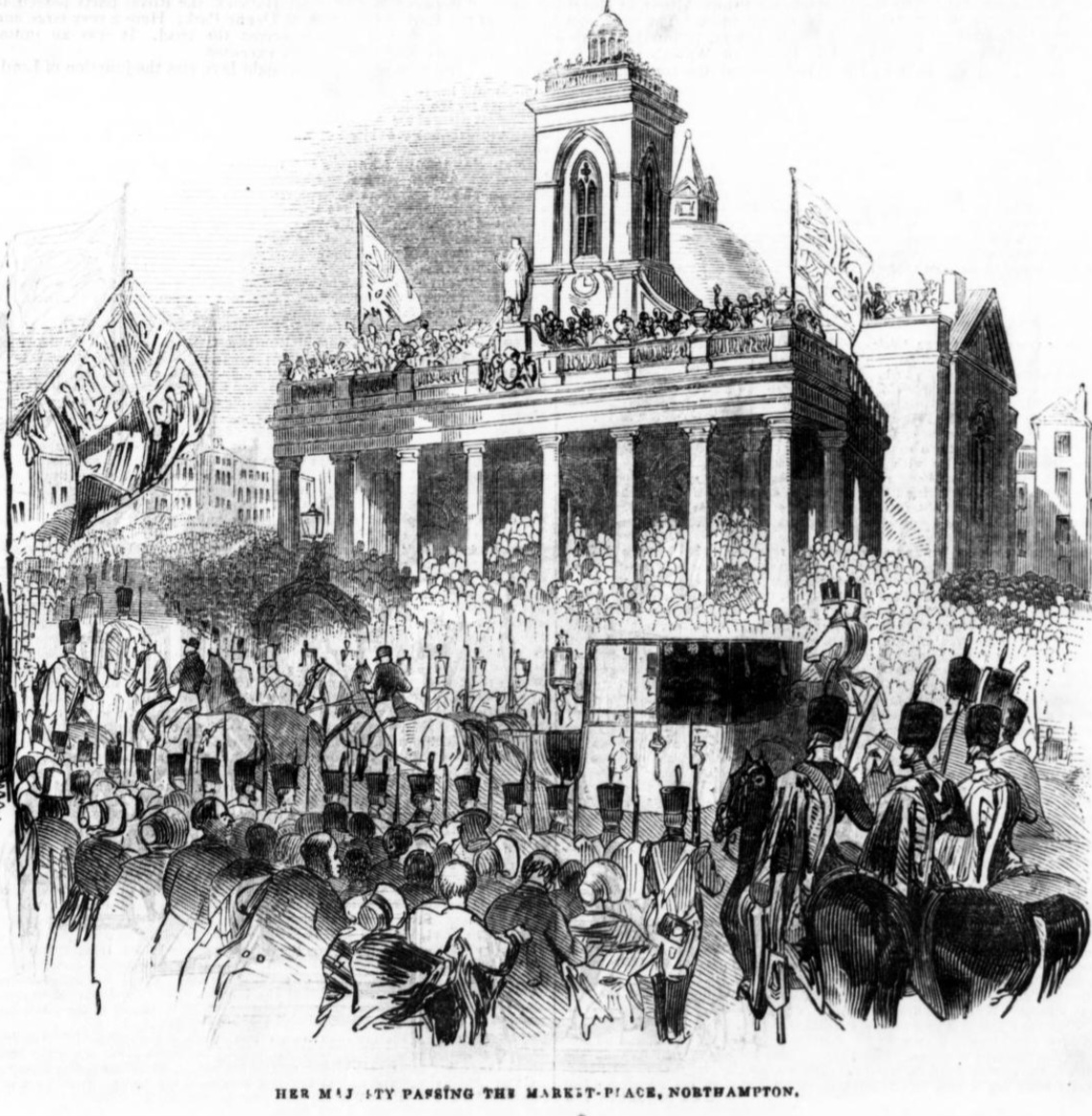
The Mayor and Queen both gave rousing speeches, before the Royal Carriage went on its way.
A few miles outside of Northampton, the carriage changed horses at a roadside inn called the Buttock’s Booth. This is thought to have been where the Lumbertubs now stands.

Changing of Horses
On a long journey, horses would need to be changed around every ten to fifteen miles. Some of Queen Victoria’s horses would have been sent to the changing points in advance. This would be so they would have been fed, watered, and rested, making them ready to take over.
They soon reached Kettering, where they were met by cheering crowds.

The Royal Couple went to the White Hart Hotel. It would later take the name the Royal Hotel to honour their visit.
This was the same hotel that Charles Dickens stayed in when he visited Kettering.
While there, they hosted Sunday School children for tea and cakes, along with some key members of Kettering society.
Following a change of horses, the Royal Carriage left Kettering and passed through some of its nearby villages.

They were all celebrating in their own way, such as Broughton’s gala day.
In Geddington, the Royal Couple would have seen its Eleanor Cross.
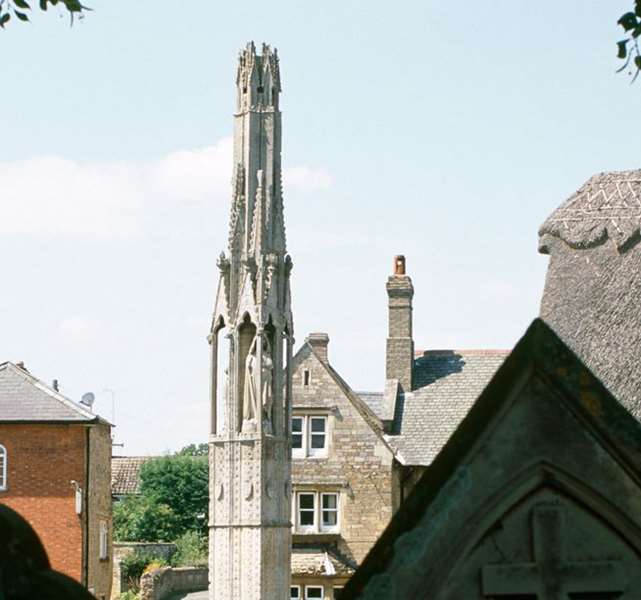
The Eleanor Cross in Geddington is one of three (out of twelve) remaining. It is also the best preserved.
The crosses were originally placed between 1291 and 1294 by King Edward I. They commemorate the route taken by the funeral procession of his wife, Eleanor of Castile, from Lincoln to Westminster Abbey.
The Royal Carriage stopped for a horse change at the King’s Arms, in the village Great Weldon.
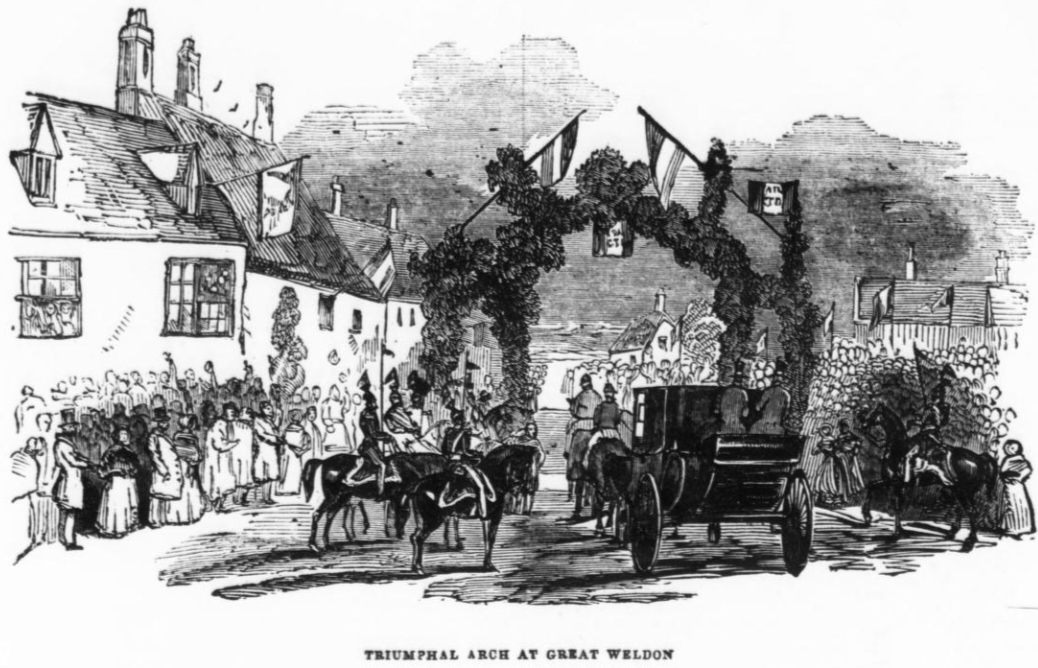
This time, the horses were provided by the Marquess of Exeter.
The Royal Carriage reached Dean Park, owned by Lord Cardigan. He was away with his regiment, but he arranged a magnificent festal arch, and a grand feast for his tenants.

They finally reached the edge of Northamptonshire, and the village of Bulwick. They were met by hundreds of the Marquess of Exeter’s men.
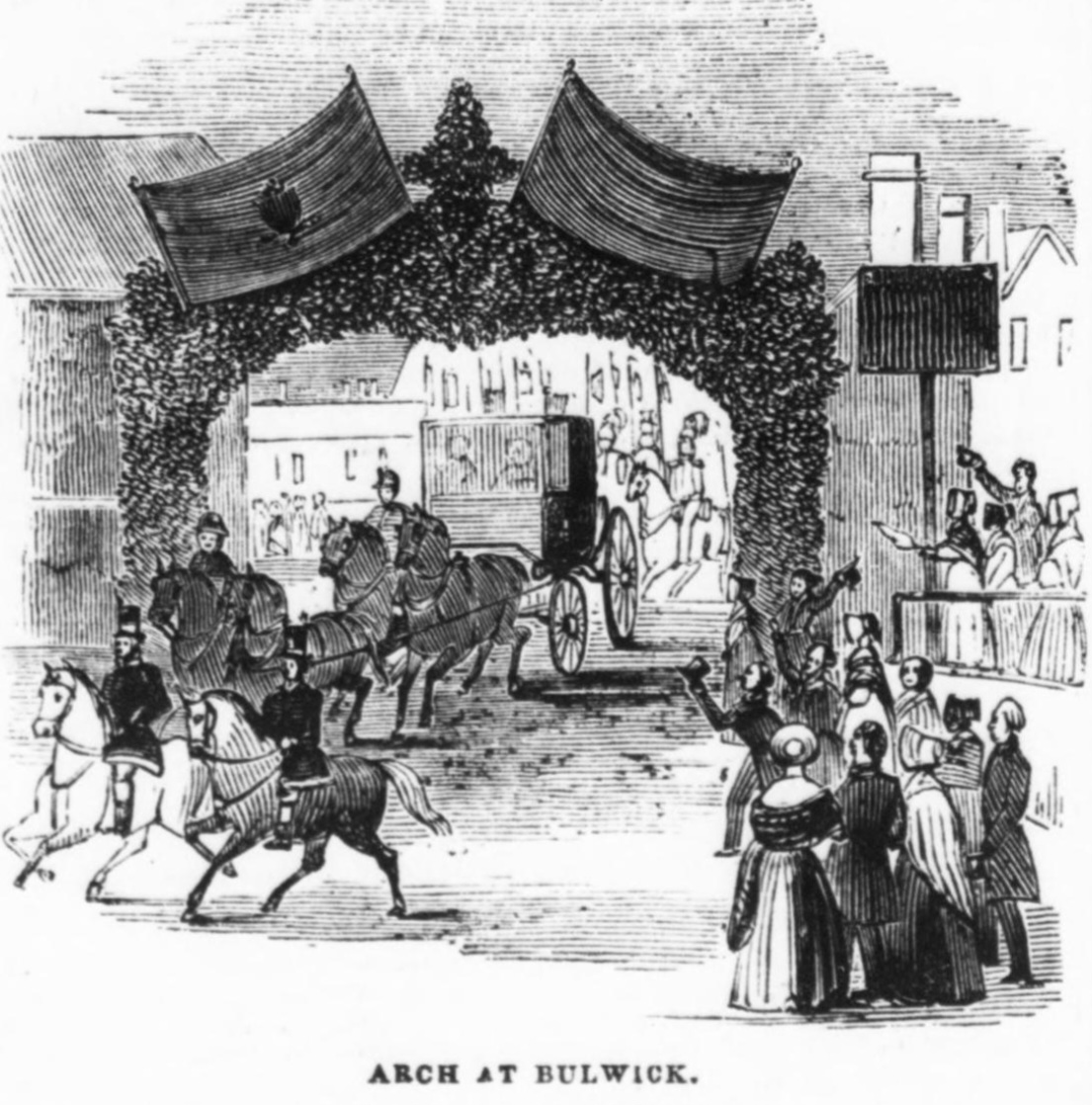
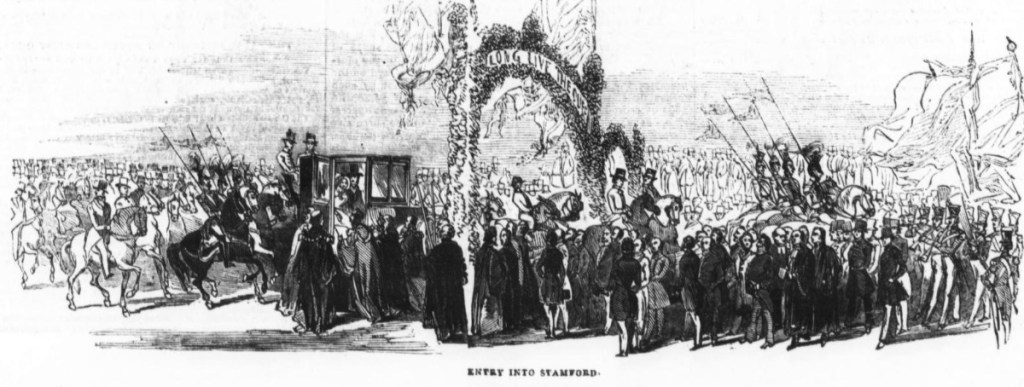
Passing through cheering crowds, the Royal Carriage left Northamptonshire as it ended its journey to Burghley House.
Sources
The Morning Chronicle, 13 Nov 1844
The Observer, 18 Nov 1844
Illustrated London News, 16 and 23 Nov 1844
 Jack Preston
I remember a talk given about Victorian kettering, and one of the things that the woman who gave the talk said was that Victoria only stopped at what became the Royal Hotel to use the toilets
LikeLike
Well, that’s probably a touch of comic exaggeration – it was a scheduled stop for them to change horses, and maybe Vic did have a “pit stop.”
It’s possible she was ambushed by the children’s tea party, and was too polite to decline 😁
LikeLike