
Kettering Town
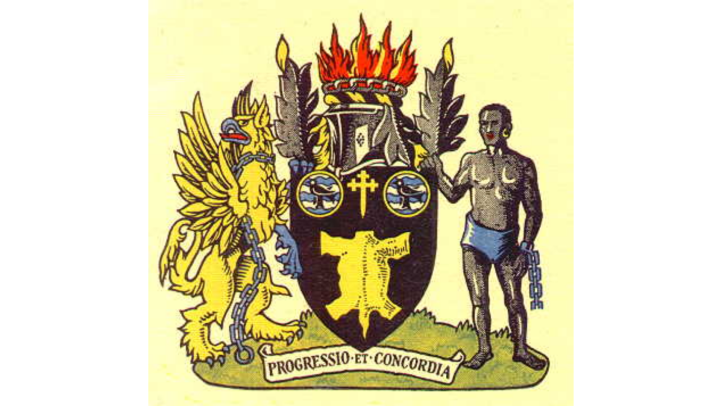
Kettering’s earliest recorded Coat of Arms was issued in 1938.
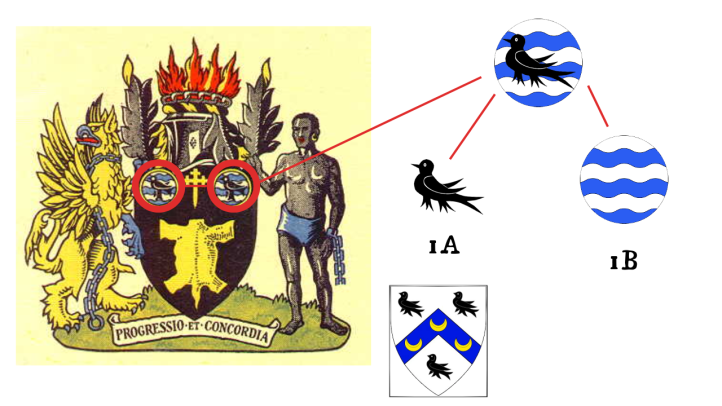
1A – The Martlet comes from the family crest of the Watsons of Rockingham Castle; along with the Montagus, the Watsons were the Lords of the Manor. 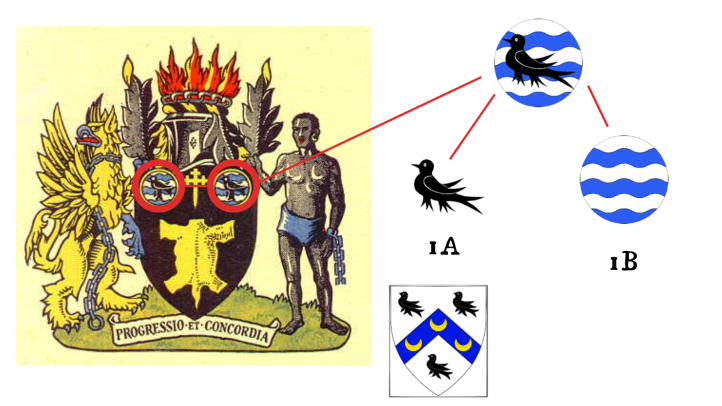
1B – The Fountains represent the Baptist Missionary Society, which was founded in Kettering in 1792. 
2A – The Dexter (left) Supporter is from one of the coats of arms belonging to the Dukes of Buccleuch, who are the Montagu family. 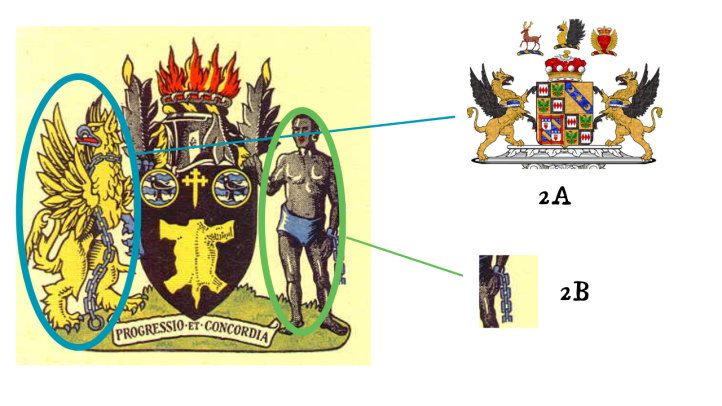
2B – The Sinister (right) Supporter shows a freed slave with his chains broken – this represents Kettering’s own William Knibb, who played a big role in the Abolition of Slavery, a source of pride in Kettering. 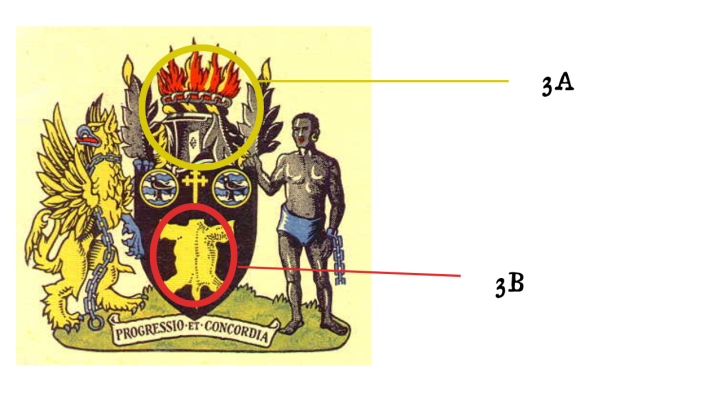
3A – The Helm on the Crest represents one of Kettering’s industry, iron ore. 
3B – The Hide represents one of Kettering’s industries, leatherwork and specifically footwear. 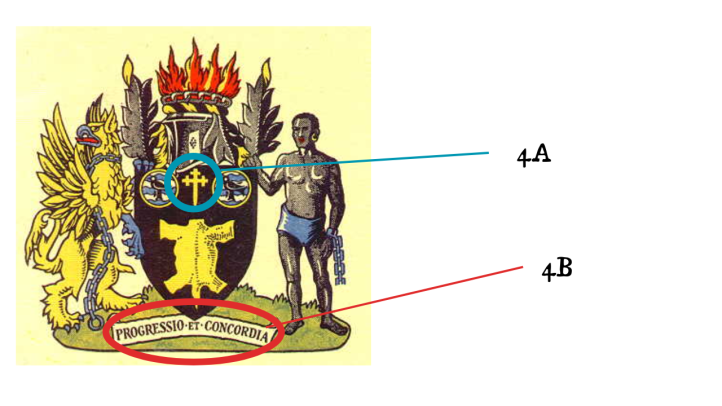
4A – The Cross comes from the arms belonging to the Bishopric of Peterborough. This is also where the Cross-Keys symbol seen across the town comes from. 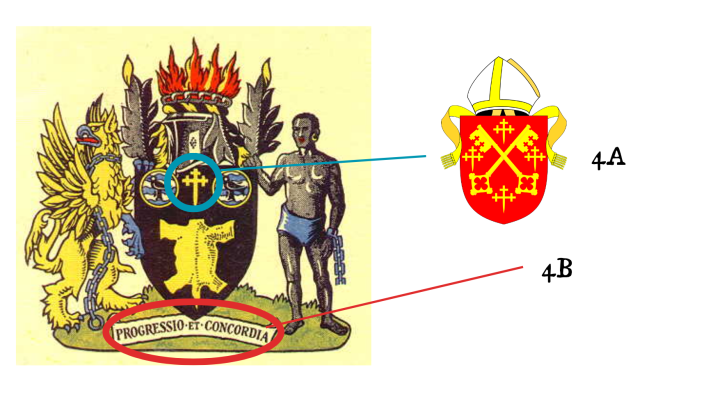
4B – The Motto – “Progress and Concord”
Swipe or click along to see the labels and captions.
Click here to see all labels.
- 1A – The Martlet comes from the family crest of the Watsons of Rockingham Castle; along with the Montagus, the Watsons were the Lords of the Manor.
- 1B – The Fountains represent the Baptist Missionary Society, which was founded in Kettering in 1792.
- 2A – The Dexter (left) Supporter is from one of the coats of arms belonging to the Dukes of Buccleuch, who are the Montagu family.
- 2B – The Sinister (right) Supporter shows a freed slave with his chains broken – this represents Kettering’s own William Knibb, who played a big role in the Abolition of Slavery, a source of pride in Kettering.
- 3A – The Helm on the Crest represents one of Kettering’s industry, iron ore.
- 3C – The Hide represents one of Kettering’s industries, leatherwork and specifically footwear.
- 4A – The Cross comes from the See of Peterborough. This is also where the Cross-Keys symbol seen across the town comes from.
- 4B – The Motto – “Progress and Concord”
Kettering Borough/District
The Borough of Kettering was formed by the amalgamation of the former Borough of Kettering and some of its rural district; the Burton Latimer Urban District; the Desborough Urban District; and the Rothwell Urban District.
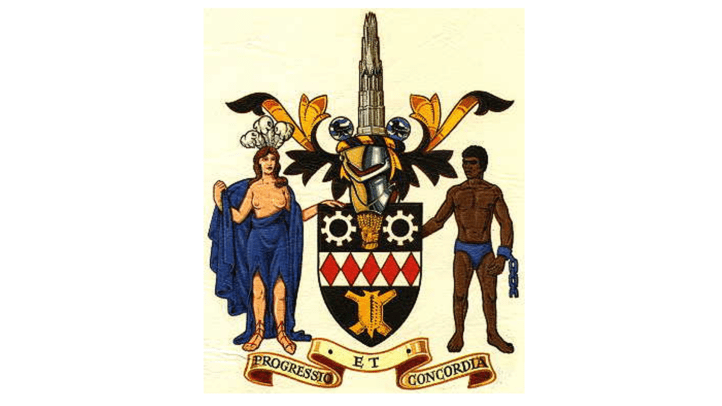

1A – The Martlet comes from the family crest of the Watsons of Rockingham Castle; along with the Montagus, the Watsons were the Lords of the Manor. 
1B – The Fountains represent the Baptist Missionary Society, which was founded in Kettering in 1792. 
2A – The Dexter (left) Supporter is from one of the coats of arms belonging to the Dukes of Buccleuch, who are the Montagu family. 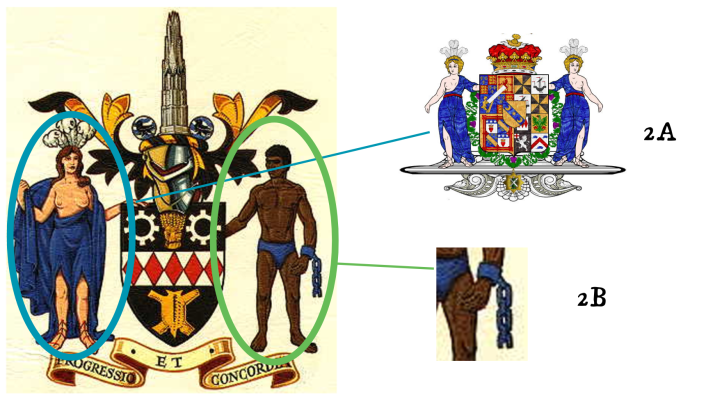
2B – The Sinister (right) Supporter shows a freed slave with his chains broken – this represents Kettering’s own William Knibb, who played a big role in the Abolition of Slavery, a source of pride in Kettering. 
3A – The Eleanor Cross of Geddington. This is the best preserved of all the Eleanor Crosses. 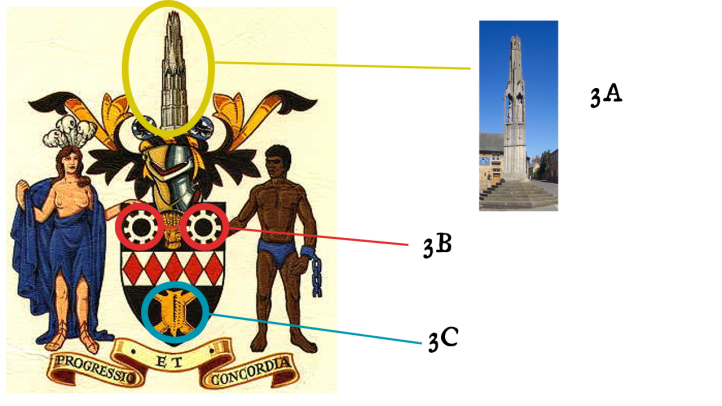
3B – The Cogwheel represents one of Kettering’s industries, engineering. 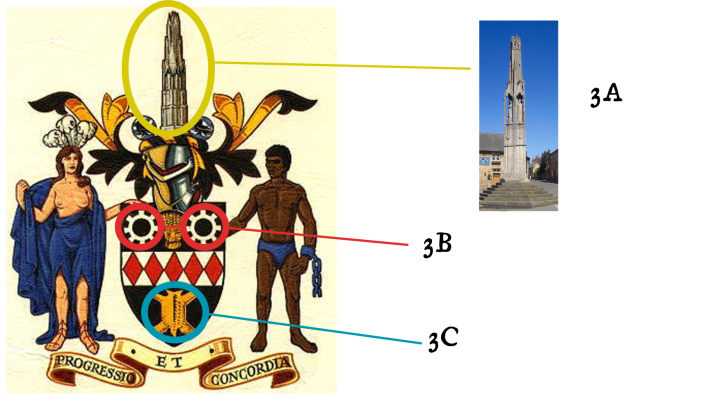
3C – The Hide represents one of Kettering’s industries, leatherwork and specifically footwear. 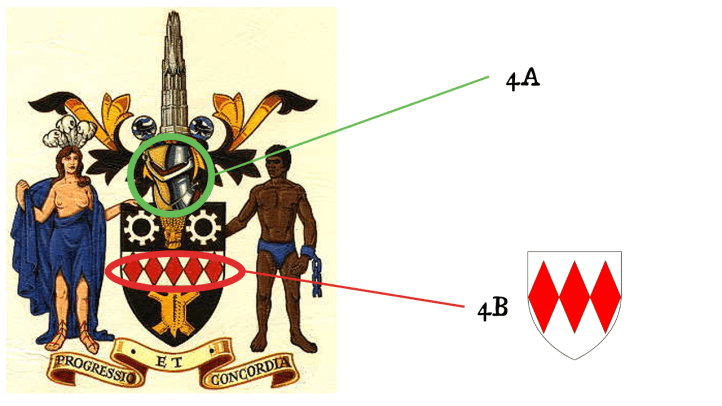
4A – The Helm on the Crest represents one of Kettering’s industry, iron ore. 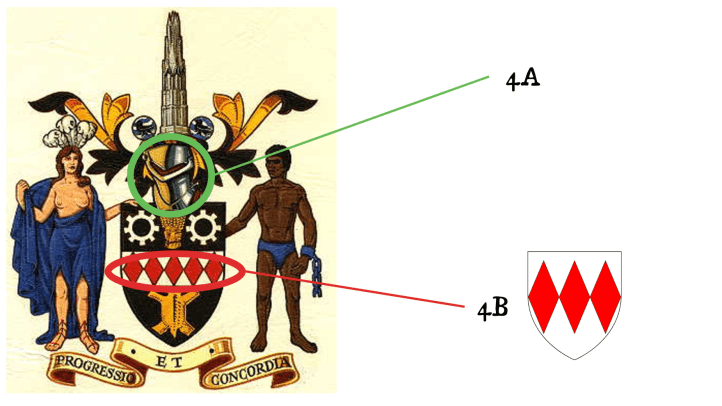
4B – Resembles the family crest of the Montagu family. The five Lozenges (diamonds) are to represent the five councils united. 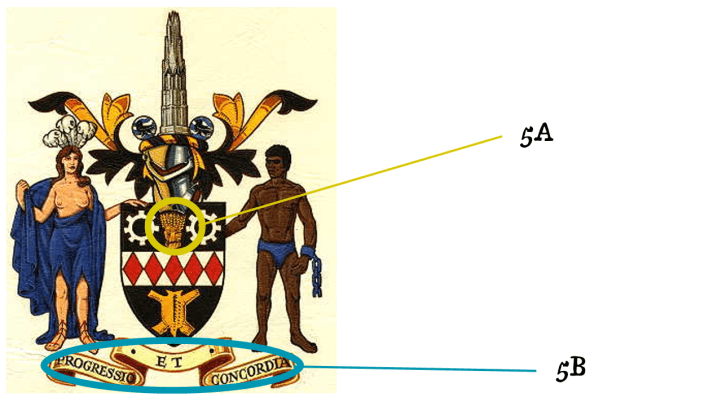
5A – The Garb (wheat) represents one of Kettering’s industries, agriculture. 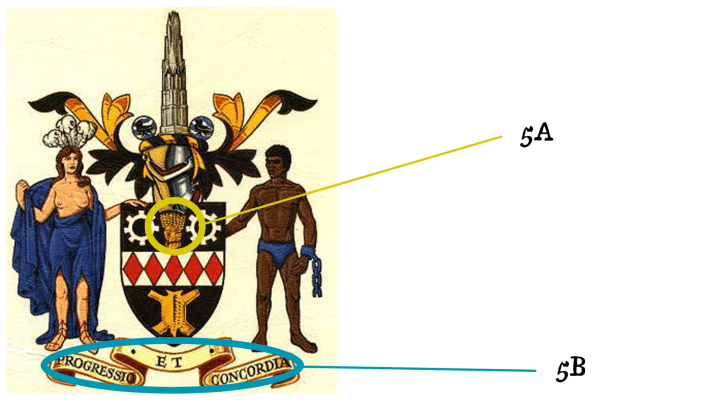
5B – The Motto – “Progress and Concord”
Swipe or click along to see the labels and captions.
Click here to see all labels.
- 1A – The Martlet comes from the family crest of the Watsons of Rockingham Castle; along with the Montagus, the Watsons were the Lords of the Manor.
- 1B – The Fountains represent the Baptist Missionary Society, which was founded in Kettering in 1792.
- 2A – The Dexter (left) Supporter is from one of the coats of arms belonging to the Dukes of Buccleuch, who are the Montagu family.
- 2B – The Sinister (right) Supporter shows a freed slave with his chains broken – this represents Kettering’s own William Knibb, who played a big role in the Abolition of Slavery, a source of pride in Kettering.
- 3A – The Eleanor Cross of Geddington. This is the best preserved of all the Eleanor Crosses.
- 3B – The Cogwheel represents one of Kettering’s industries, engineering.
- 3C – The Hide represents one of Kettering’s industries, leatherwork and specifically footwear.
- 4A – The Helm on the Crest represents one of Kettering’s industry, iron ore.
- 4B – Resembles the family crest of the Montagu family. The five Lozenges (diamonds) are to represent the five councils united.
- 5A – The Garb (wheat) represents one of Kettering’s industries, agriculture.
- 5B – The Motto – “Progress and Concord”
Kettering Parish
Following the formation of the North Northamptonshire Unitary Council in 2021, a new Coat of Arms was issued.
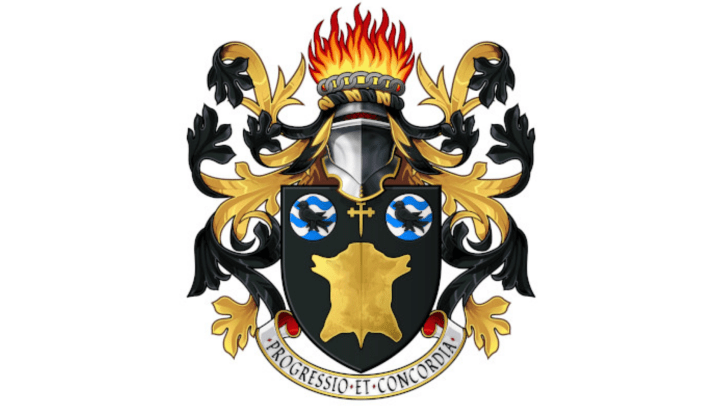

1A – The Martlet comes from the family crest of the Watsons of Rockingham Castle; along with the Montagus, the Watsons were the Lords of the Manor. 
1B – The Fountains represent the Baptist Missionary Society, which was founded in Kettering in 1792. 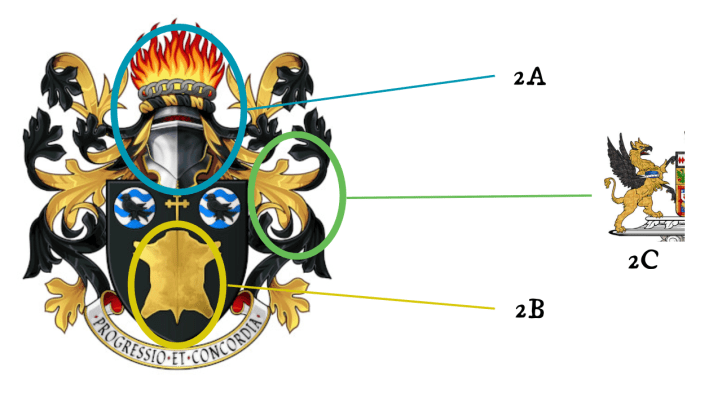
2A – The Helm on the Crest represents one of Kettering’s industry, iron ore. 
2B – The Hide represents one of Kettering’s industries, leatherwork and specifically footwear. 
2C – The black and gold colouring comes from one of the coats of arms belonging to the Dukes of Buccleuch, who are the Montagu family. 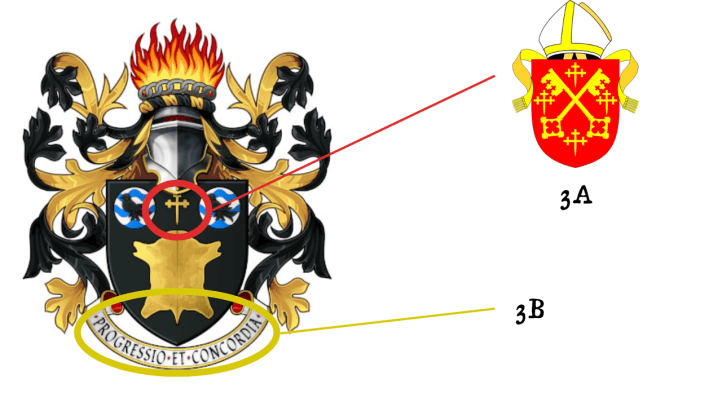
3A – The Cross comes from the arms belonging to the Bishopric of Peterborough. This is also where the Cross-Keys symbol seen across the town comes from. 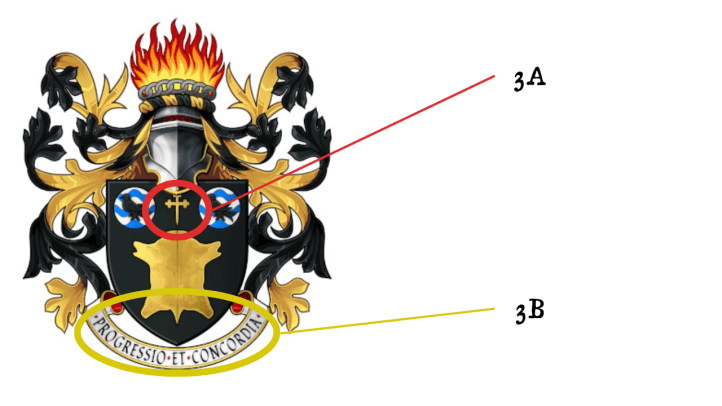
4B – The Motto – “Progress and Concord”
Swipe or click along to see the labels and captions.
The Supporters were removed due to rules from the College of Arms.
Click here to see all labels.
- 1A – The Martlet comes from the family crest of the Watsons of Rockingham Castle; along with the Montagus, the Watsons were the Lords of the Manor.
- 1B – The Fountains represent the Baptist Missionary Society, which was founded in Kettering in 1792.
- 2A – The Helm on the Crest represents one of Kettering’s industry, iron ore.
- 2B – The Hide represents one of Kettering’s industries, leatherwork and specifically footwear.
- 2C – The black and gold colouring comes from one of the coats of arms belonging to the Dukes of Buccleuch, who are the Montagu family.
- 3A – The Cross comes from the See of Peterborough. This is also where the Cross-Keys symbol seen across the town comes from.
- 3B – The Motto – “Progress and Concord”
Sources
 Jack Preston