
There are a number of streets in Kettering which are named after famous authors. But there’s only one who’s been known to visit our town.
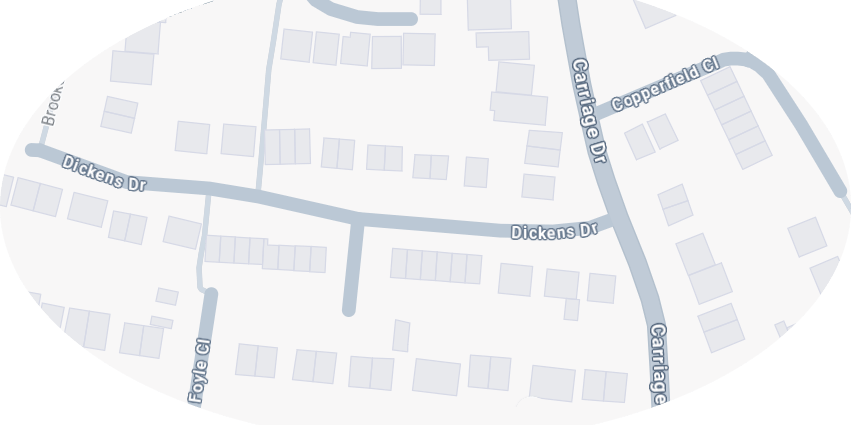
Near Dickens Drive are Foyle Close and Copperfield Close:
Foyle Close could be named after Foyles, a London bookshop founded by William Foyle, a big fan of Dickens.
Copperfield Close is named after David Copperfield, one of Dickens’ most famous books.
Before his success, Charles Dickens worked as a journalist for the Morning Chronicle. In 1835, he was sent to Kettering to cover the by-election.
This by-election was triggered by the death of the sitting Whig MP, Viscount Milton. The Whigs (along with the Tories) were one of the two main parties.
The Whigs later evolved into the Liberal Party. In the 1980s, they merged with the Social Democrat Party to create the Liberal Democrats.
Unfortunately, Dickens wasn’t left with the best impressions of our town!
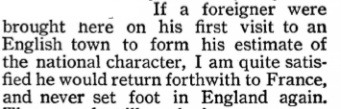
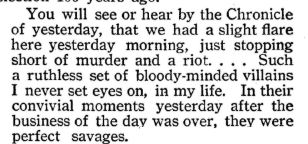
He saw the people of Kettering as as drunken idiots who lapped up all the lies told by one of the political parties.
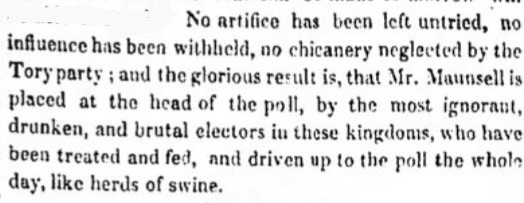
Following the defeat of the Whigs, Dickens decided to view the voters as being politically uninformed.

He also thought the people of the town were almost forced into voting for the Tories by the clergy and magistrates.

Though the Whigs themselves weren’t free from blame. Dickens saw their failures in government as causing them to lose their seat.

Dickens and the other journalists were staying in the White Hart Inn, which would later be known as the Royal Hotel following a visit from Queen Victoria.
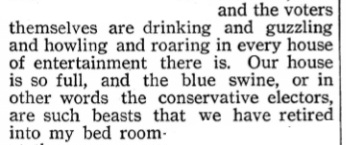
The voters were making so such a ruckus, that Dickens and his journalist friends retreated to his hotel room!
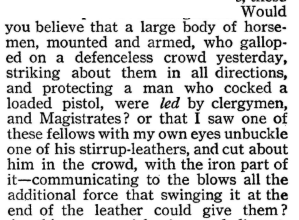
But the officials were acting even worse! They were attacking the townspeople from atop horses, and one of the political candidates was brandishing a gun!
How Kettering Influenced Dickens
Despite regularly visiting friends in Northamptonshire, it seems Dickens never returned to Kettering following the election.
But whatever Dickens thought about Kettering, it left an impact!
In his first novel, Pickwick Papers, the main characters come across a by-election in a town called Eatanswill. Many of the ridiculous events depicted in these chapters were influenced by his time in Kettering. The characters even go to a pub called the Peacock Inn!
Kettering also may have played a role in his second novel, Oliver Twist.
It’s usually assumed that the workhouse on Cleeveland Street in London was the basis for the one in the story. But Kettering had a workhouse (now St Mary’s Hospital), and is the same distance away from London as the town of Mudfog, the fictional town from where Oliver escaped.
Makes you think!
*
Sources
https://www.theguardian.com/culture/2011/mar/19/mudfog-workhouse-dickens-oliver-twist
“Dickens and His Wife: Letters of the Novelist”, The Pole Star Monthly, 1 August 1934
 Jack Preston