
History is all around us, the past leaves footprints everywhere.
Scattered across Kettering are old buildings which were once schools.
Learn about them below, and how they fit into the evolution of England’s school system as a whole.
The Song School
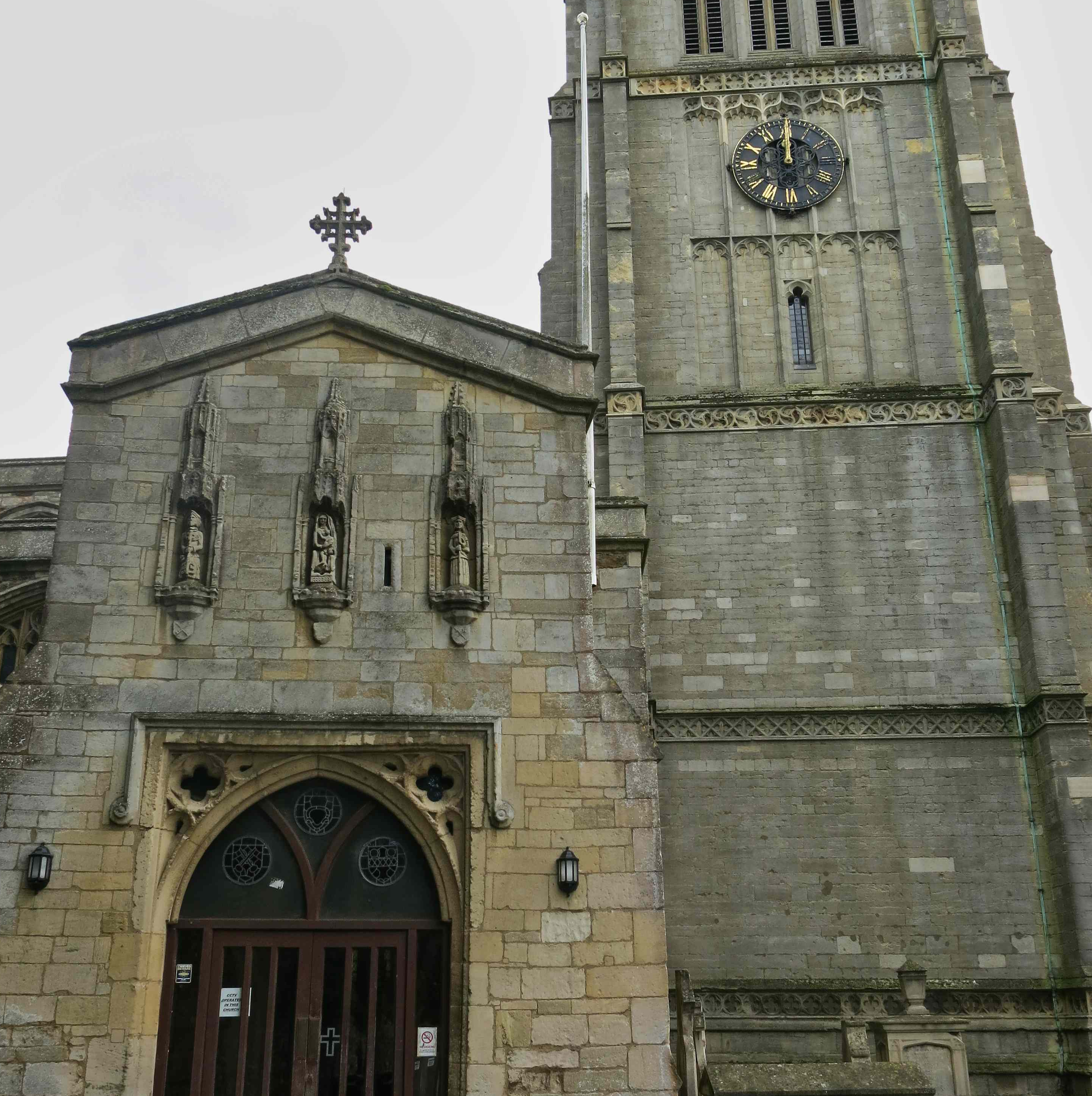
In medieval England, very few ordinary people could read. Song schools, attached to churches, taught boys to sing in the choir while giving them a basic education in reading Latin and church music. They helped preserve and promote learning long before literacy became more widespread after the Reformation.
Kettering’s song school was in St Peter and Paul’s Church. It was effectively a precursor to the town’s Grammar School, as the chantry which funded the song school was reassigned to it following the Reformation.
Market Hill Girls’ School
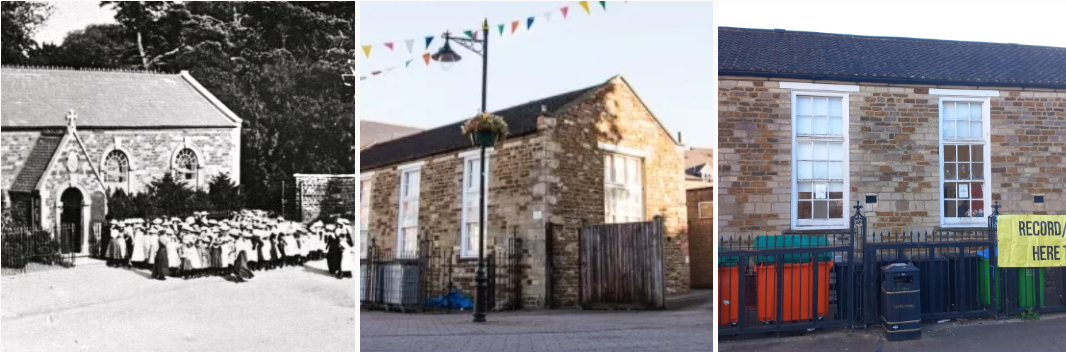
1709 to 1927.
- 1709: opened as The Girls’ Charity School.
- 1834: it had become a day school, and was taken over or replaced by the National Girls’ School.
- 1890s: became a Girls’ Senior School.
- 1927: it closed when it merged with the Boys’ National School, to create the Parish Church Mixed School.
The Girls’ Charity School opened in 1709. It was funded by a charitable endowment (mostly Rev Nathaniel Bridges’ £300 gift, supplemented by later donations) which was invested by trustees, with the annual interest paying for the education (and originally even the clothing and boarding) of poor girls from Kettering.
Their curriculum was likely to be basic literacy, sewing/knitting, religious instruction. The aim was to make them literate enough to read the Bible, manage household accounts, and be fit for domestic service.
British Schools Established
British Schools were introduced in around 1808 by the British and Foreign Schools Society. Introduced by Quaker teacher Joseph Lancaster, they taught from a Non-Conformist Christian perspective.
School Lane Mixed School
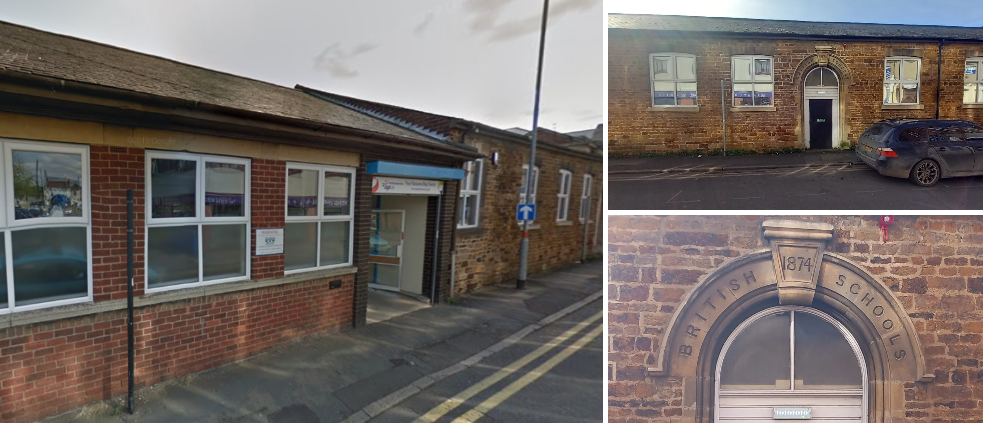
1833 to 1892.
This building has some historic significance, as its date stone makes it one of the few remaining visible representations of British Schools in the county.
The date stone is from when the school was rebuilt or extended by John Tordoff, at the same time as he built the nearby Sunday School.
At this time, boys and girls were generally taught separately after Infants School. Mixed schools were uncommon but not unheard of.
National Schools Established
Having seen the success of British Schools, and not wanting to lose their influence over the working class, the Church of England established the National Society for the Education of the Poor in the Principles of the Established Church in 1811. The following three schools to open were National Schools.
Church Walk Infants School
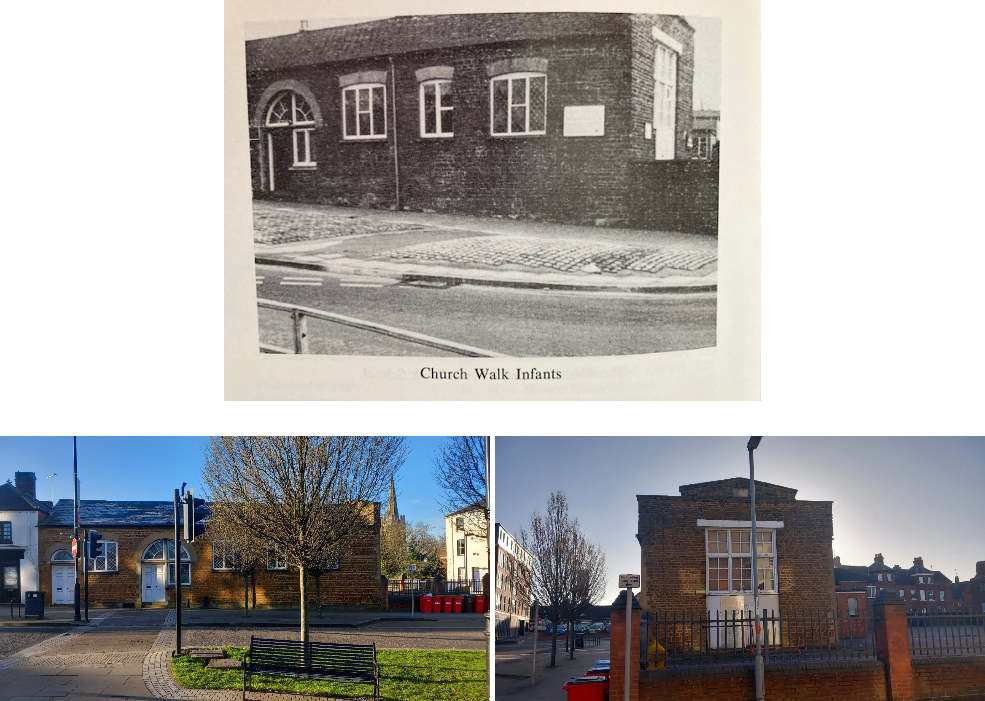
1820 to the 1950s.
Alexandra Street Girls’ Upper School
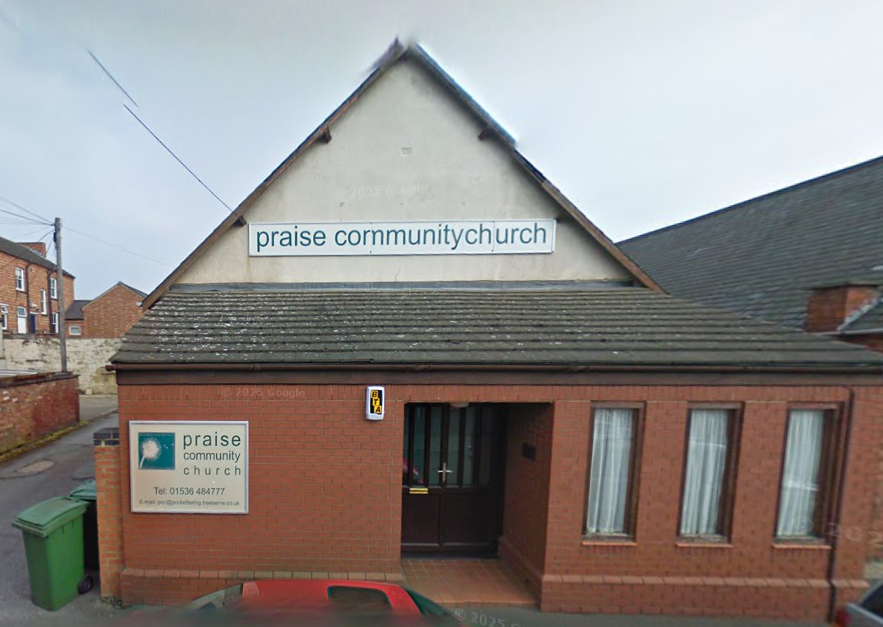
1870s to 1900s.
Buccleuch Street Infants School
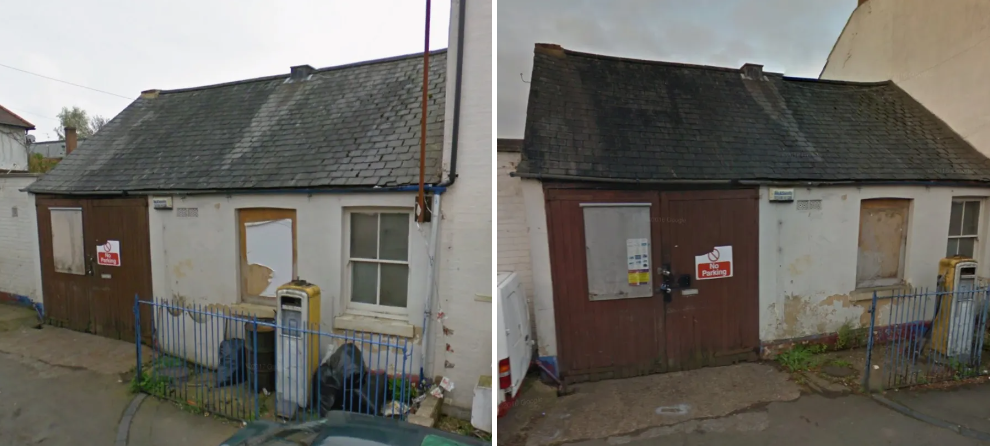
1876 to 1900s.
The building is (probably) bigger than it looks: the school was for more than 100 pupils! It is now an appliance shop.
School Boards Established
The Elementary Education Act of 1870 set up elected School Boards in towns and cities. These boards could build new schools wherever church schools (National or British) were not enough.
The schools they ran were called Board Schools. They gave basic education in reading, writing, and arithmetic, and were open to all children, no matter what church (or chapel) their family attended.
Kettering School Board wasn’t formed until 1890.
Stamford Road School
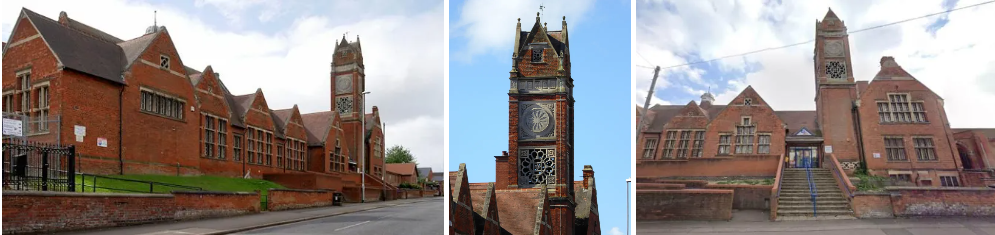
1892 to 1983.
Originally a Mixed Primary School, it later became a Boys’ Secondary School.
It merged with Kettering Boys’ School in 1976, serving as its “lower school”, teaching the first two years of secondary.
Stamford Road School closed in 1983.
Rockingham Road School
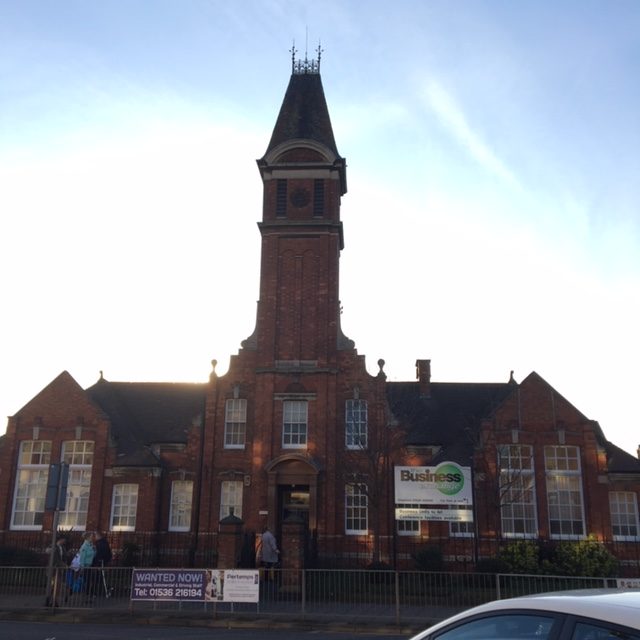
1894 to 1980.
Originally a Mixed Primary School, it later became a Girls’ School.
It merged with Southfields Girls’ School to in 1976. One year group moved over to the Lewis Road campus each year. The school closed when the last pupils left in 1980.
Education Act
The Education Act 1902 abolished School Boards and created Local Education Authorities. Board Schools became council schools, while National and British Schools remained owned by their churches or trustees, but were funded and inspected by the local authority. This marked the beginning of the modern state education system.
Kettering Grammar School
and
Kettering High School for Girls
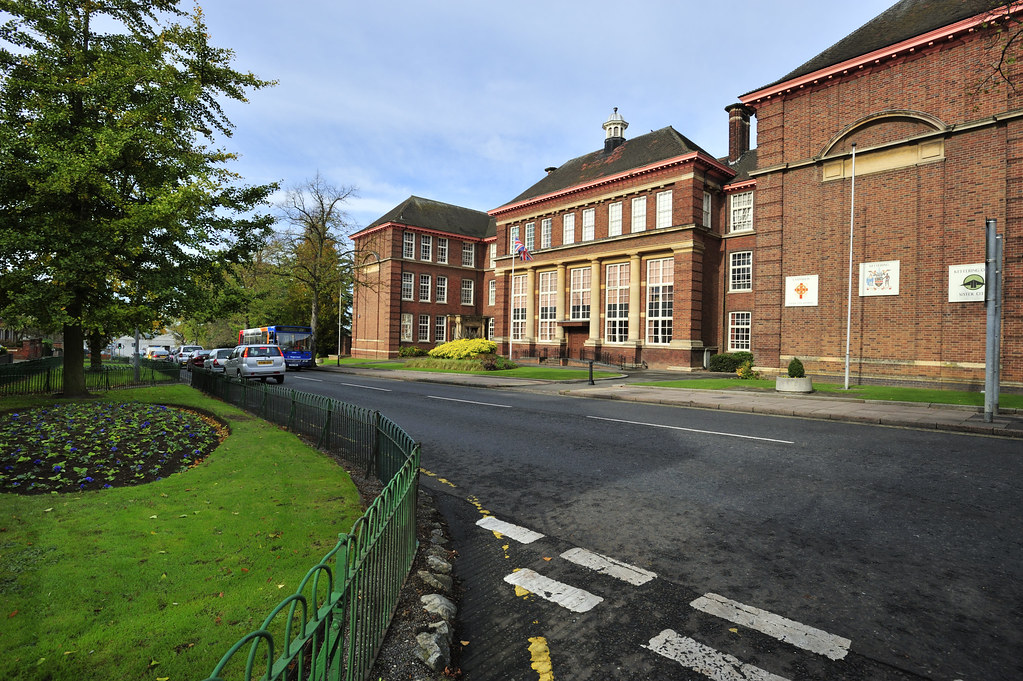
In 1913, Kettering Grammar School moved into a new purpose-built campus, which was shared with the new Kettering High School for Girls.
The building was divided in two, so the pupils would never cross paths. Even the playground (now a carpark) was split by a wall. Unfortunate boys would sometimes be thrown over this wall into the other playground…
Following the Butler Act of 1944, both would be classed as Grammar Schools, with entry dependent upon the 11-plus exam.
Hillside, Headlands
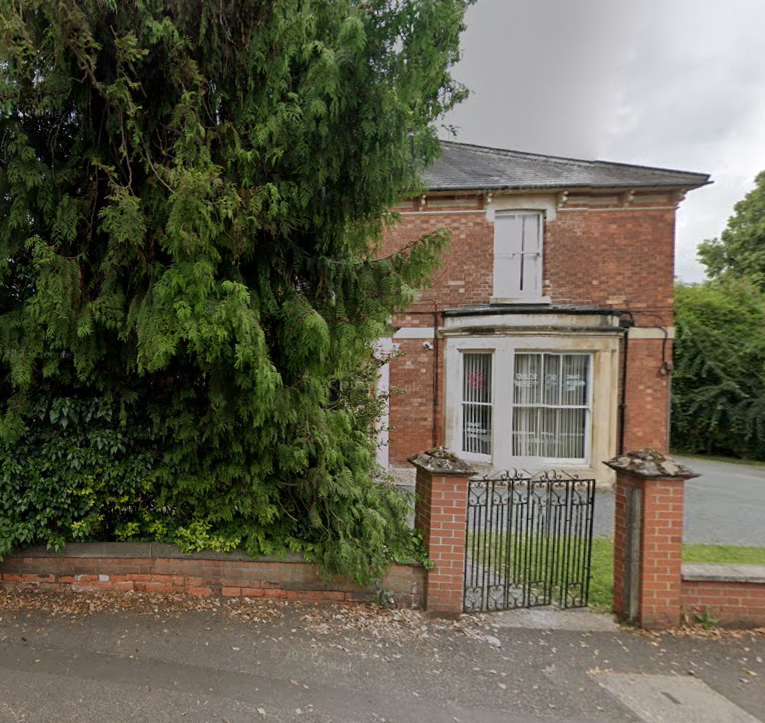
This school started as a private girls’ school, and was run by Mrs Worters and her daughters.
It was purchased by Kettering High School for Girls in 1917, used as an overflow when the town’s population grew.
Butler Education Act (1944)
Secondary education was reorganised into:
- Secondary Modern Schools: the default.
- Grammar Schools: for pupils with a strong academic aptitude, preparing them for university and professional careers through a broad, academically focused curriculum.
- Technical Schools: for pupils who showed an aptitude for science, engineering and technical subjects, preparing them for skilled industrial and professional careers.
Selection was by the 11-plus examination.
Comprehensive Schools Introduced
Technical Schools weren’t built in the numbers envisaged: they required specialist equipment for engineering, metalworking, woodworking, and scientific resources. Following WWII, Britain was broke, and couldn’t afford to build the amount of schools to meet these requirements.
This meant that by the 1960s, secondary education almost had a two-tier system: Grammar Schools for those deemed the best, Secondary Modern Schools for everyone else. To address this, the government introduced Comprehensive Schools, bringing children of all abilities together in a single secondary school.
Both of Kettering’s Grammar Schools became single-sex Comprehensive Schools in the 1970s.
South College
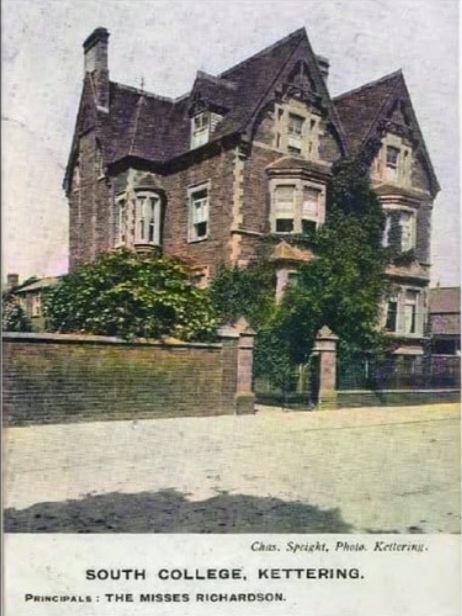
This private school was attended by Kate Edith Pierce, the woman behind the modern library system.
It is now private homes.
• My Books • More Local History •
Sources
Bull, F.W. (1891) History of Kettering.
Bull, F.W. (1908) Kettering Charities.
Cornerstone Kettering (2026) Kate Pierce: Librarian, Curator, Feminist.
Kettering High School Old Girls’ Association (2025) History.
Mercer, R. (2006) Chairman’s Letter, Kettering Civic Society.
Peyton, S.A. (1933) Kettering Vestry Minutes 1797-1853
Slough, B. (1995) Cytringanian Farewell: Kettering Grammar/Boys’ School.
 Jack Preston
Very interesting, Jack. However, Kettering High School merged with Rockingham Road School for Girls to become Southfield in September 1976, not 1975.
LikeLiked by 1 person
Oops, thank you for that!
LikeLike